First Five Petitons
The founder of the movement, Yayo Stenka Romanov, is not an anthropologist, economist, socio-political researcher, theologian, or historian, but a person who discovered truths along the way through his sense of social empathy and his extensive work with young people, aimed at understanding and exploring their aspirations. Although he is not known for being a virtuous man or anything of the sort, he received spiritual revelations. Once he grasped them and believed in them, he put into practice the petitions he received because he knewit had been the Divinity who was asking. He understood the moment that humanity was undergoing; he witnessed that none of the solutions that were being proposed offered a way out to the terrible predicament in which it found itself entangled. He clearly sensed an interesting path and decided to fight for it in the final years of his life, convinced that the main key for civilization to gain levels of well-being lies in individual and social human spiritual development, which includes making a decision and fighting against the negative forces that lead man to despicable goals, steered by greed, avarice, ego, and short-sightedness.
The movement’s founder has not stood out during his life as an individual of enormous economic achievements, nor as an example of virtuosity, according to the classical schemes. Rather, his life forced him to appear as a controversial individual, challenged for not having achieved success at an early age, according to the prevailing patterns. He disconnected from the system, which he found unfair, and became a rebellious, critical man, who learned to grow in humility over time, after a series of hard clashes, and polished his way of dealing with differences and learned to coexist without becoming depressed in a world devoid of empathy and filled with individualism. He learned to overcome frustration at the lack of awareness of others, and perhaps his main success has been learning to understand the motives and reasons of other people’s failures.
Finally, in his old age, after many mistakes, together with his innate stubbornness, he felt ready to start this movement, in spite of the fears that assailed him about what might come. A clear and powerful Voice, which only he could hear, asked him to carry out three missions, summarized as follows:
You shall perform a test, which you will call the Soul Test.
This test will measure people’s consciences and their development. It shall not be used by any one religion, but by all those who wish their members to grow and learn to confront themselves with truth. It must not only target churches, but also corporations, lodges, mafias, organizations of good and evil, associations, secret services, states, armies, terrorist groups, other movements and all people or groups who wish to break the chains that bind them in a world with no major relevance, without transcendent projection, as if death did not exist and their current longings were the only ones.
Read more
This test must come with a lie detector, as the participants’ defense mechanisms may lead to not answering truthfully, at least during the first answers. The results should be shown in colors and those who intend to serve as guides after the results, or lend themselves to feedback, in addition to the preparation received in their own organization, should be properly trained in the handling and interpretating the test.
Before you make the Test, you will have to write a book, which you will call Gotas de Agua Viva (Drops of Living Water).
It will be similar to a manual to develop the test where you will narrate what happened to you in order to fulfill the mission. One part of what you must write will be revealed to you; the rest will be based on your own criteria and experience. The idea is that the Soul Test should inspire confidence, and not be seen as a biased instrument, even though it was conceived for its debut in St. Peter’s Basilica.
I ask you to fight for the union of Christian religions, at least on the core points, to bring them all together.
I also ask you, with vital urgency in these times, to find a way to mitigate the rejection of the Jewish people towards the name of Jesus and his messianic task. I do not see the need to emphasize the divergent points, but rather to try to join forces to solidify and reinforce the congruencies.
Read more
The Scriptures are prone to manipulation, whether of affinities or contradictions. Therefore, using them for disagreement is a huge mistake. Disagreements should not focus on concepts but on life experiences. We will never agree on pure doctrine, its exegesis, translations, and interpretations. Instead, we should try to focus on the behavioral essence of the gospel and the Torah, to create bonds of union in love, in dedication, in the search for justice, in empathy and in the practice of the other virtues based on the Graces that come from the Holy Spirit.
The time has come to put our petty differences aside, because what is truly great, what really counts, is the Overwhelming Truth of my passion that has allowed my Father to pour out the Divine Spirit into human beings, into my existence’s path of life, and into the channels of access to eternity that my death and resurrection have enabled. The beauty of this sacrifice of love cancels out the small contradictions caused by different interpretations of the various sacred passages. Harmony should reign between the different Christian Churches as well as with the Jewish ones, with the main emphasis placed on the circumcision of the heart and on the commandments of love given in the book of Leviticus and later endorsed in the Gospels. The Jewish people and the whole house of Israel must accept this overwhelming reality. But for this to happen, the apostleship methodology must be very different from that used in the past or that used today, since the latter has only led to strife. It is not the language of confrontation that is needed. Using and contrasting one text or another from the Torah or the Biblical Canon to demonstrate that each one is right is absurd. If the scriptures of the past give rise to differences, we will have to use the lines that the Holy Spirit writes on people’s souls today, for the testimony of the Circumcision of the Heart to speak eloquently.
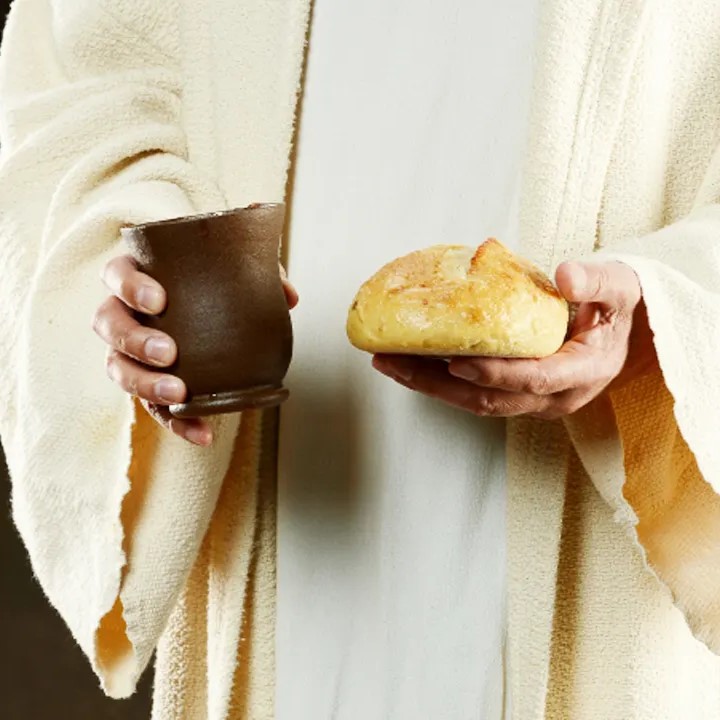
Find a way so that EVERYONE can attend the Holy Supper or the Eucharist and so that a spirit of unity reigns among the gathering faithful.
On the other hand, this to-and-fro of having to go to confession in order to receive communion, even if it is not facilitated by the priests themselves, generates a chain of shocks in spiritual growth, based mainly on the fear of eternal damnation. The soul will never be cleansed if we do not allow it to penetrate with great serenity and faith in the authentic Grace of God.
Read more
The gradual confession should be more like a continuous incremental process, with its ups and downs, of course, but which would be plotted as a steady upward slope. At present it is an action that would be mapped like the electroencephalogram of a person in a state of epilepsy, with sharp peaks but no upward trend. We have been practicing the process of forgiveness and growth, of approaching God, in an epileptic way, with very small advances in faith. The feeling of resurrection must be sustained. Far from giving a sense of chance, of betting on roulette, of panic and sacramental myth, it should produce the conviction that it will be so and that we are walking on the right path; even if this posture is not very profitable in economic terms and in terms of dependence. God is a being full of mercy, but He wants us to participate harmoniously in the path that was opened to us with the Cross and Resurrection of Christ.
Rather than a rush for the sacrament, there should be a great respect for the commandments of charity, for what the Giver of Life represents in our existence, but without this implying an induced panic that operates to the detriment of the very nature of faith, which should be one of total trust in God. It is because of this same error in conception that the malpractices of the Church have endured for years, that the faithful have been subjected to torment and slavery, that the powers of the Church have increased, whereas the true meaning of a sacrament should not be obligatory, but should flow to be performed when a connection is given and circumstances allow. Although it is promoted by Catholic doctrine itself, it is not widely applicable due to the shortage of priests. This generates a chain of setbacks in spiritual growth since confession is done without a purpose of serious growth, it is focused on being able to take communion and often based on the fear of eternal damnation.
It is necessary to praise and ask the Heavenly Father above all.
I know that the majority of Christians believe in the Triune God; that in other Christian churches there is a unitary vision of Father and Son; and that Jews see it as idolatry that gentiles turn to Jesus as mediator or savior. It would be more didactic and friendly to leave the resurrection power in the hands of the Father, focusing on the obedience and dedication of Christ, his whole process of renunciation and growth at a human level, so that his brothers and sisters who see as idolatry the focus on his divine nature during his time on earth, may learn to love him.
Read more
His divine nature could be left for after the resurrection and before coming to earth, as described in several passages of scripture. In this way, we would avoid being left with the image of a Jesus who directly challenged the Sanhedrin, as described by the evangelists, and instead focus on him as the precursor of a path on which we are all called to rise. How can Jesus be offended by the faithful turning primarily to the Heavenly Father? If He is not part of the Trinity, He will accept it as a great truth and if He is, He will understand that the Jewish people are doing nothing more than complying with their commandments and beliefs. The important thing is that they begin to accept this Presence, described by many prophets before, that they look at Him with love and that they remove all feelings of contempt from their hearts. The time has arrived when all should come to my name with reverence, love, gratitude, for the Father himself has glorified me and I him. Being radical in one’s beliefs often loses meaning, since love must be above dogmas or be compatible with them; and when one falls into a closed defense of them, one makes little progress in one’s own or others’ spiritual growth, but rather goes against the commandments of respect and charity, which are what should prevail.
Do you feel called to contribute to this mission?
Join our course and earn your certification. Become part of our support group and engage in a profound process of self-discovery.